

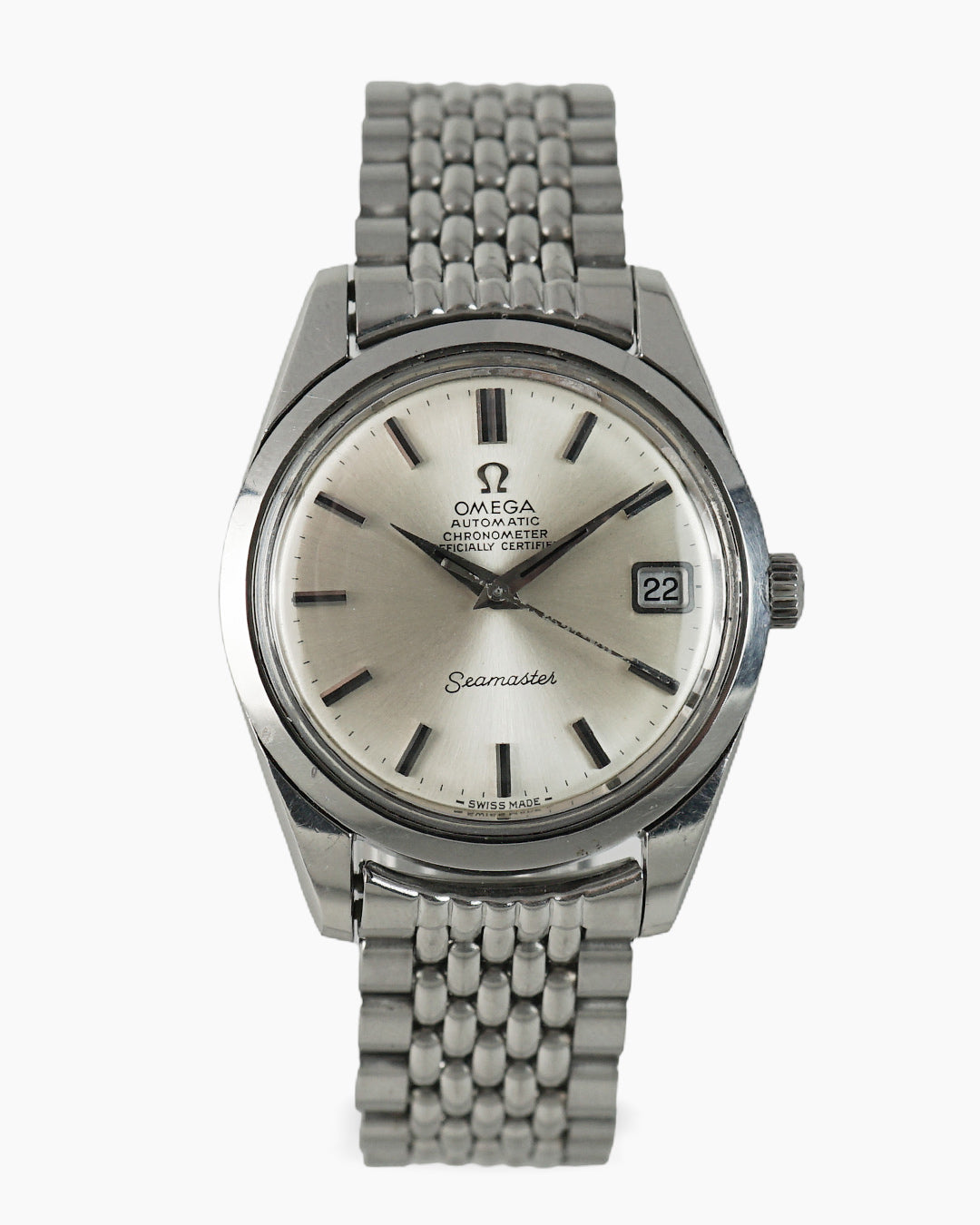
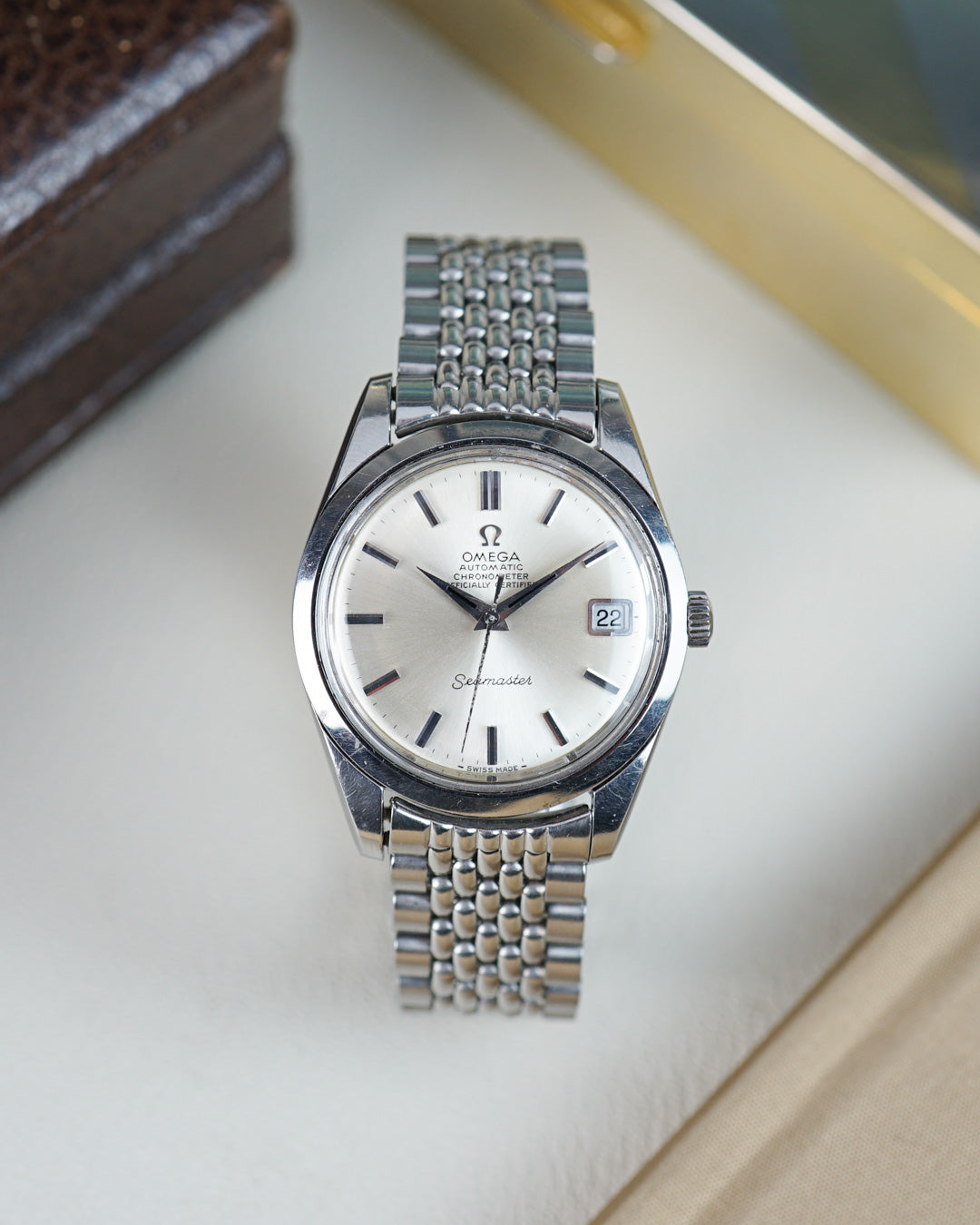
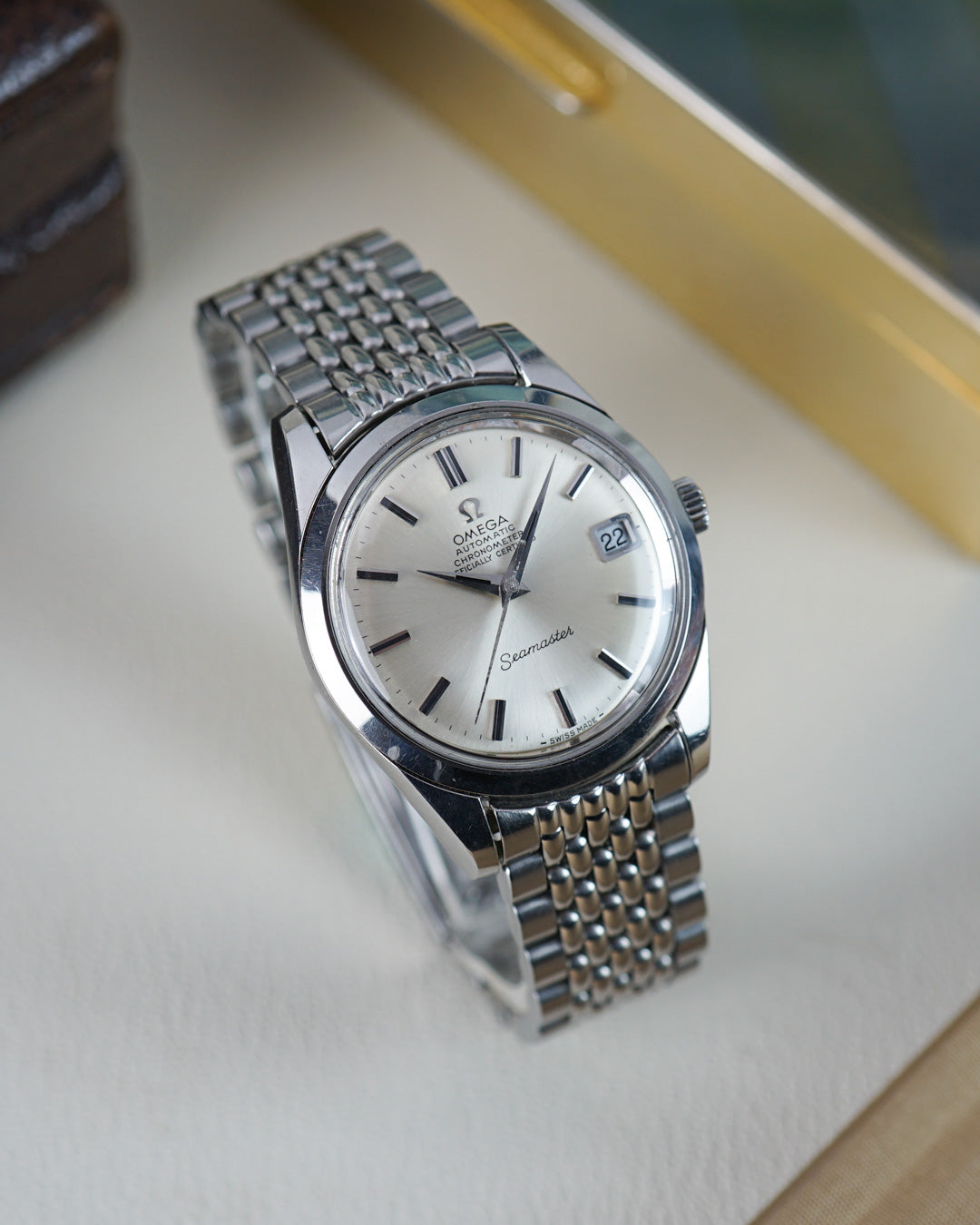
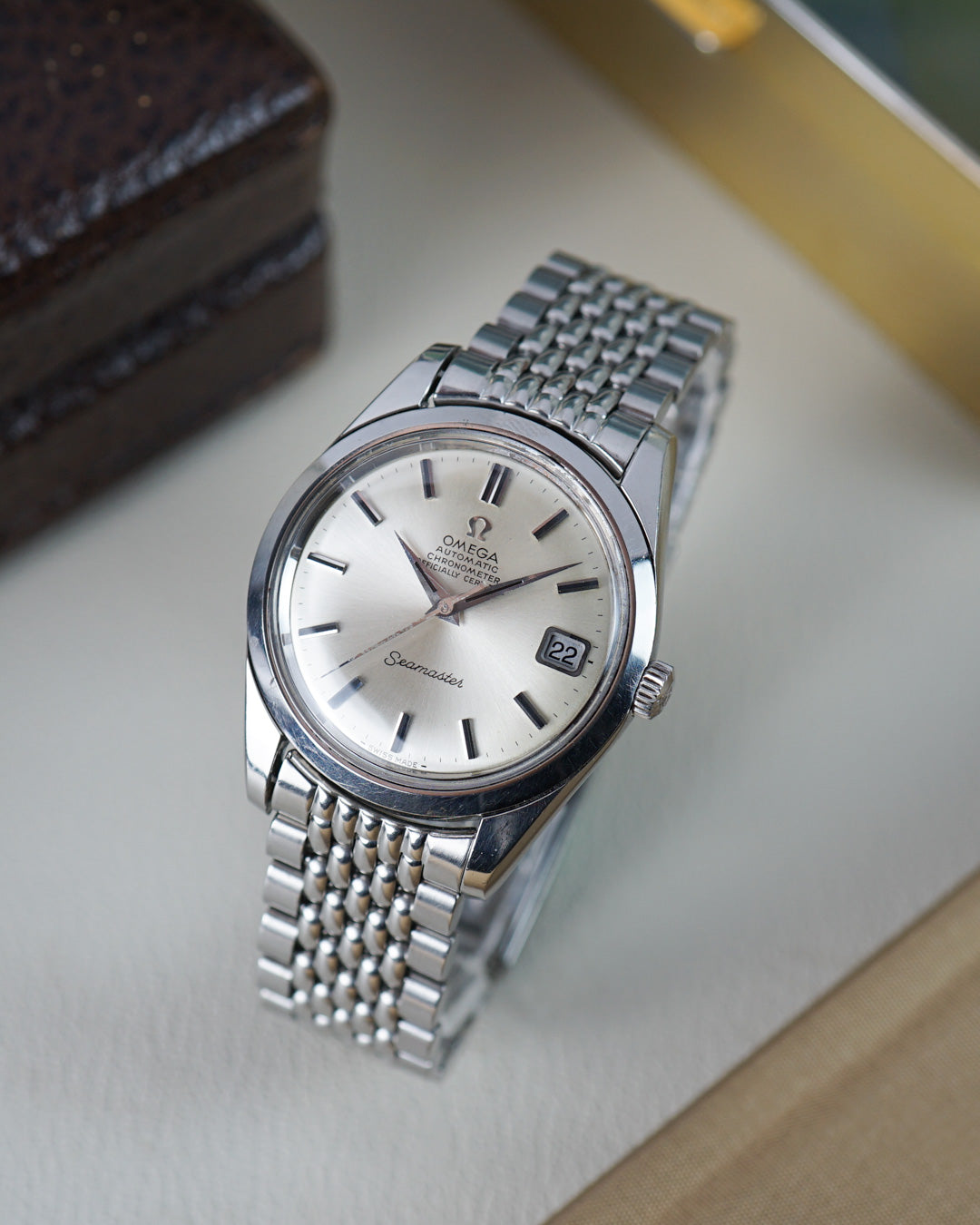
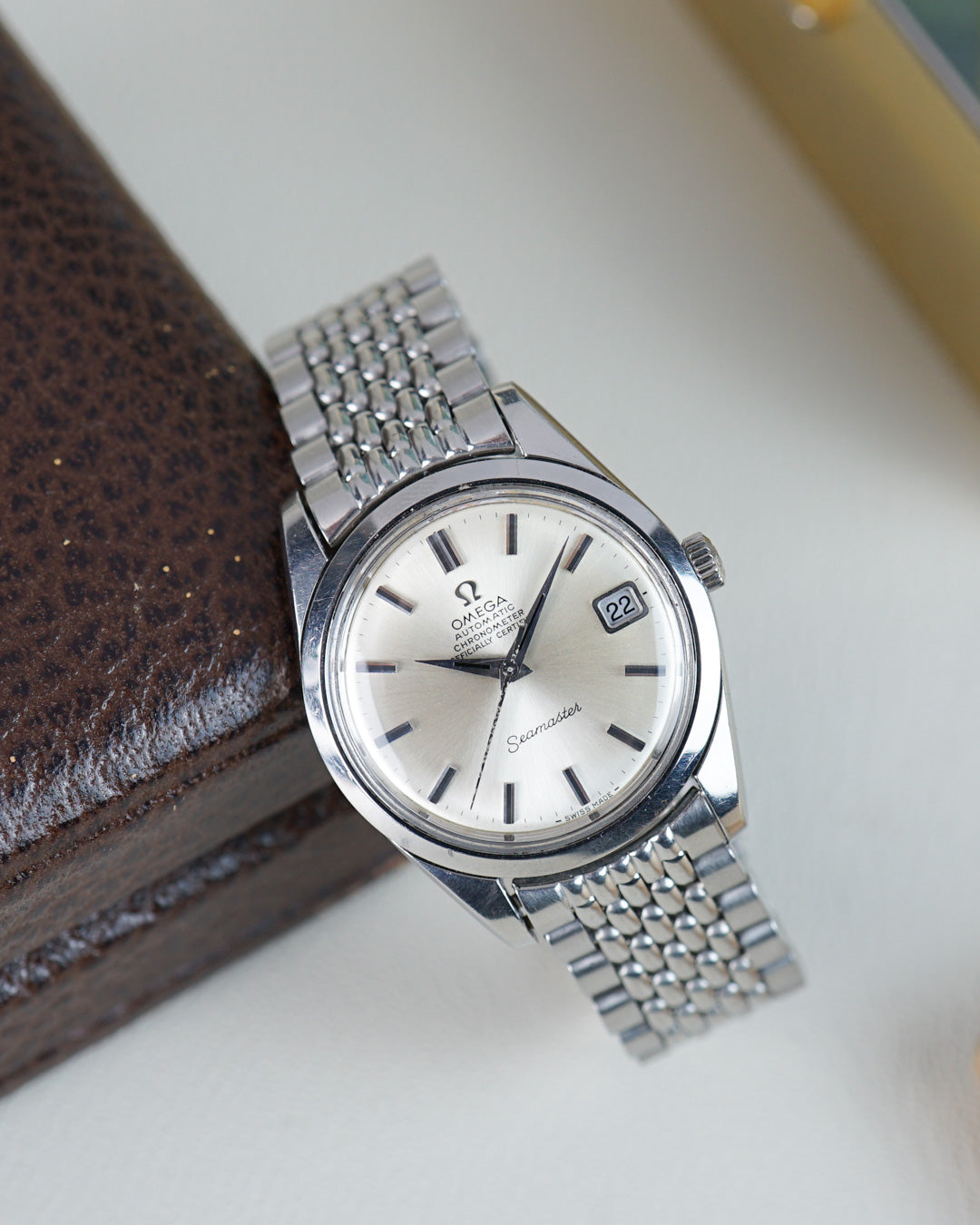
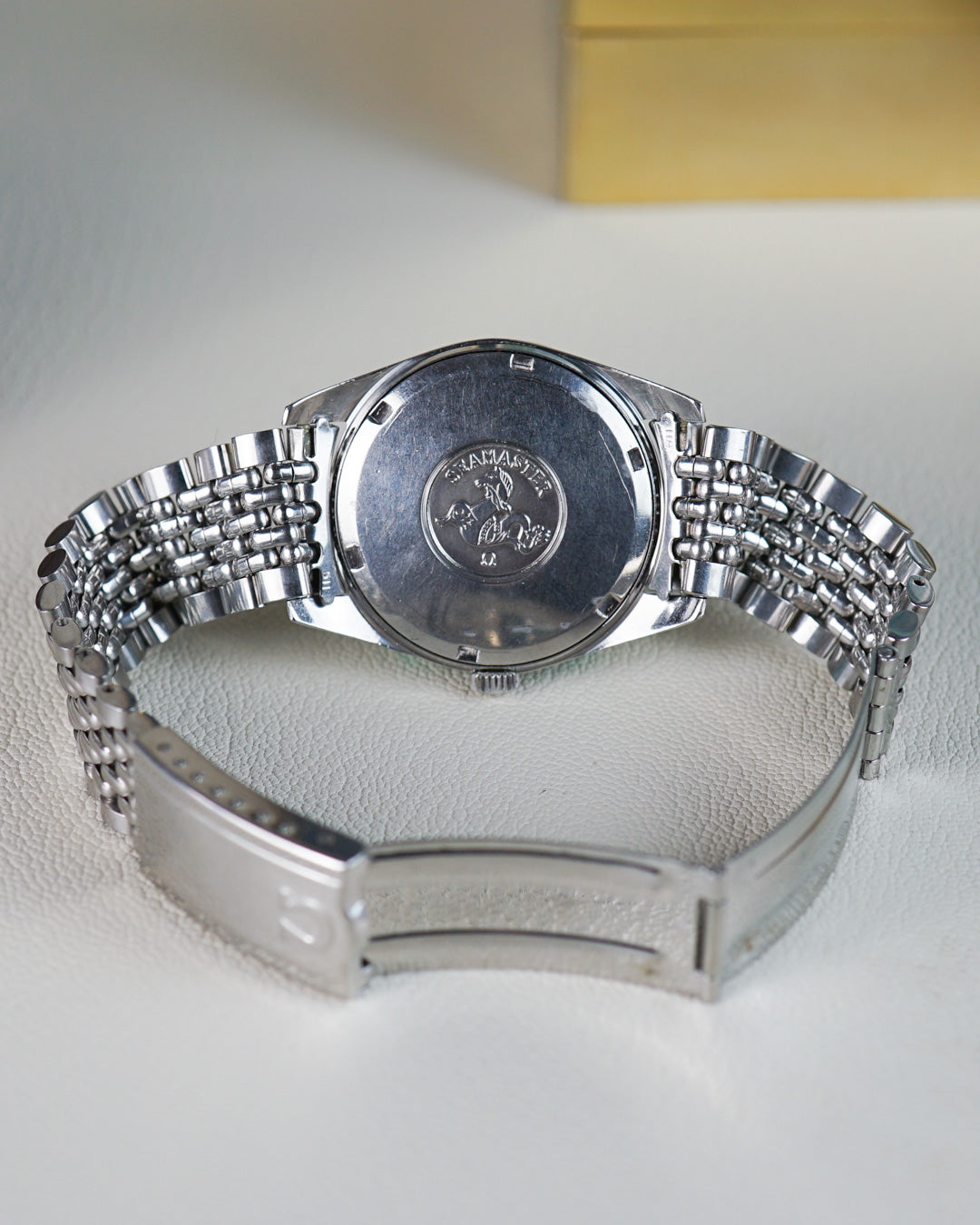
Omega Seamaster reference 168.024 Chronometer with bracelet
1970 | Stainless steel | Automatic | 34.0mm
This Seamaster Chronometer occupies an interesting position in the Omega catalogue — a tool watch by lineage, a dress watch by temperament. Reference 168.024 is the chronometer-certified variant of the 166.010, distinguished by the four-line dial text that proudly states its COSC credentials: a detail that mattered enormously at a time when chronometer certification was a genuine mark of distinction, not a marketing footnote.
The silver dial is clean and purposeful — applied baton indices, no unnecessary ornamentation, the kind of restraint that ages exceptionally well. The case follows the classic Seamaster proportion of the period, a round steel form that sits comfortably between sporty and refined.
This example presents in excellent condition, retaining its integrated bracelet — a period-correct detail that transforms the wearing experience and is all too often missing on survivors of this era. The overall presentation is that of a watch that has been looked after carefully while being enjoyed.
A serious Omega for the collector who values substance over spectacle.
Choose options
SPECIFICATIONS
Reference 168.024
Year 1970
Diameter 34.0 mm
Movement Automatic
Dial color Argent
Case material Stainless steel
Bracelet material Stainless steel
Accessories
CONDITION
Case Very good
Dial Very good
Movement Serviced
Hands Very good
Crown Very good
Warranty 12 months
Omega

Voilà une super boutique de montres vintage de grande qualité. Excellents échanges et prix très raisonnables !
Romain, FR
What a great experience with Clement! He has a beautiful selection of perfect condition vintage watches and took his time with us. Loved our experience and will absolutely be back!
Connor, US
Super professional, great selection of vintage watches, reliable and friendly. I highly recommend.
Laurent, FR
Very professional. Recommended! I hope to do business again with Sabiwatches!
Nikolaus, AT