

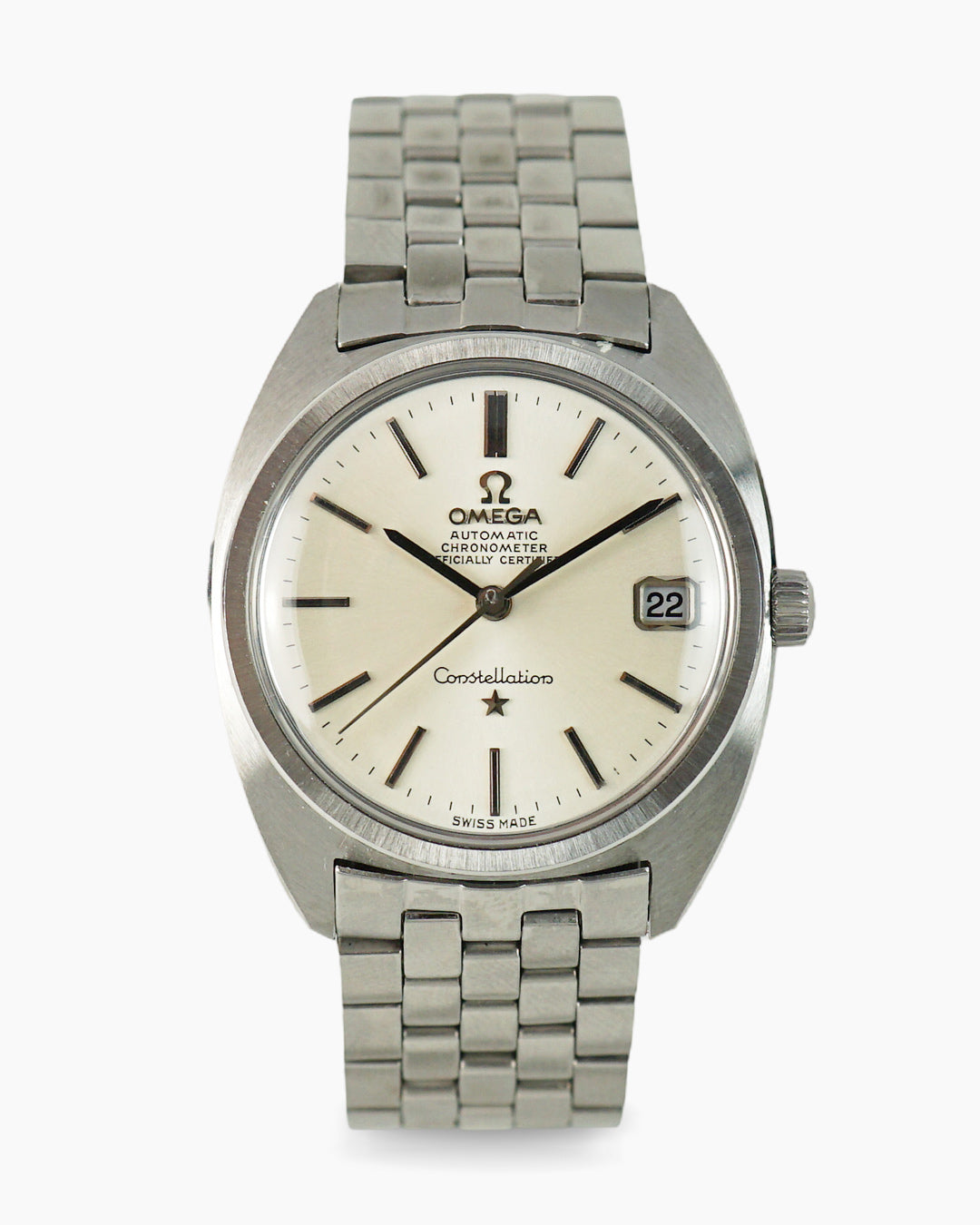
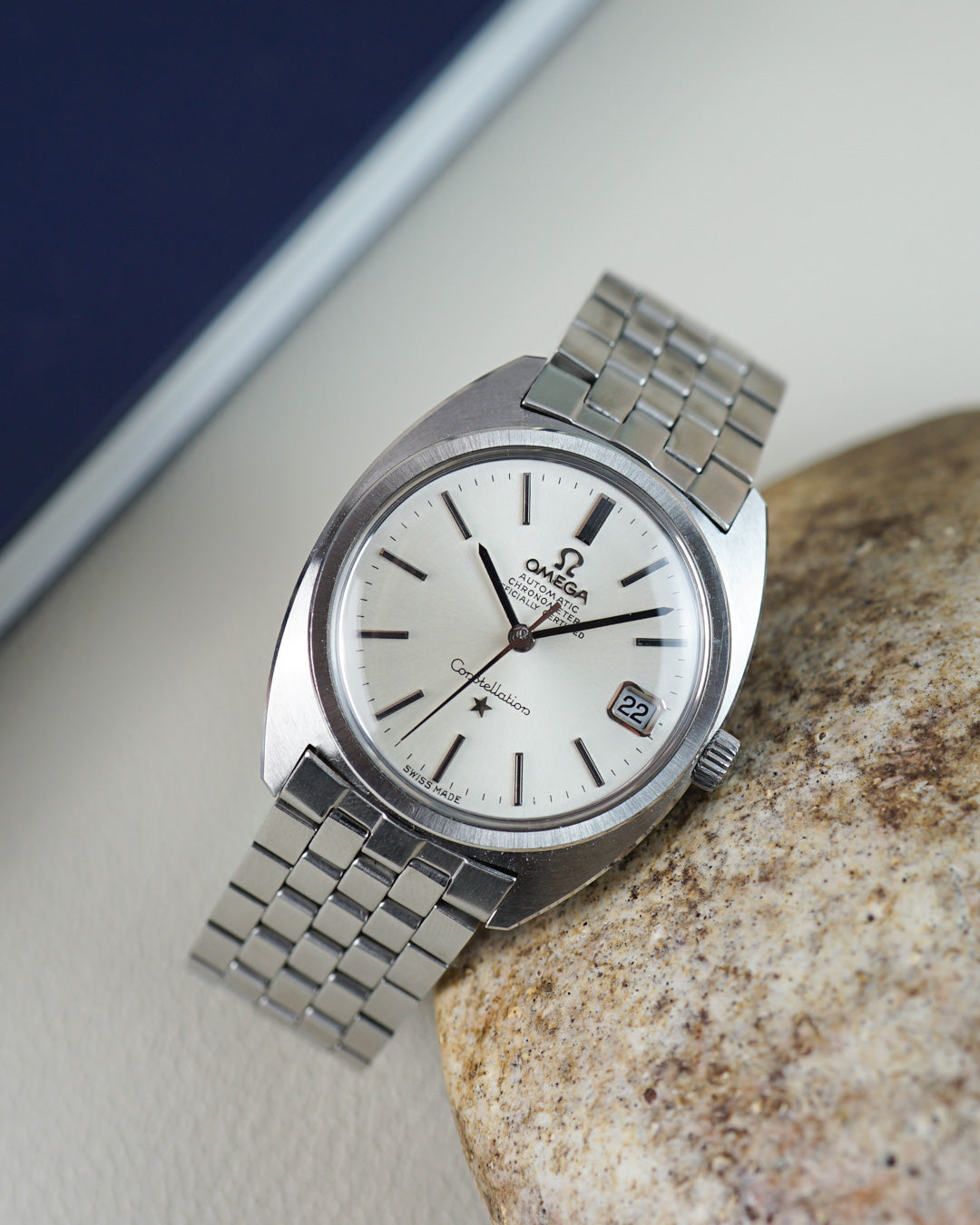
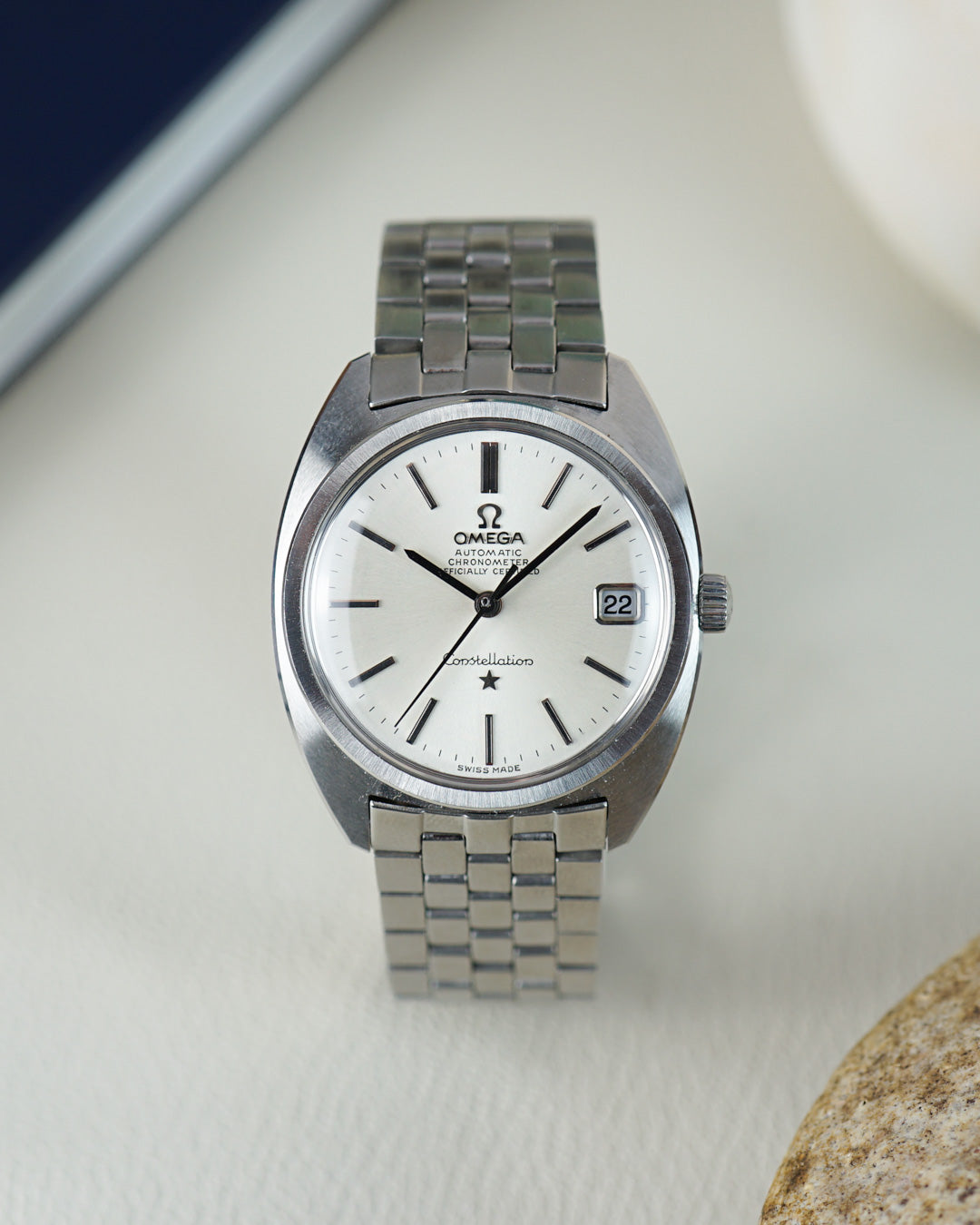
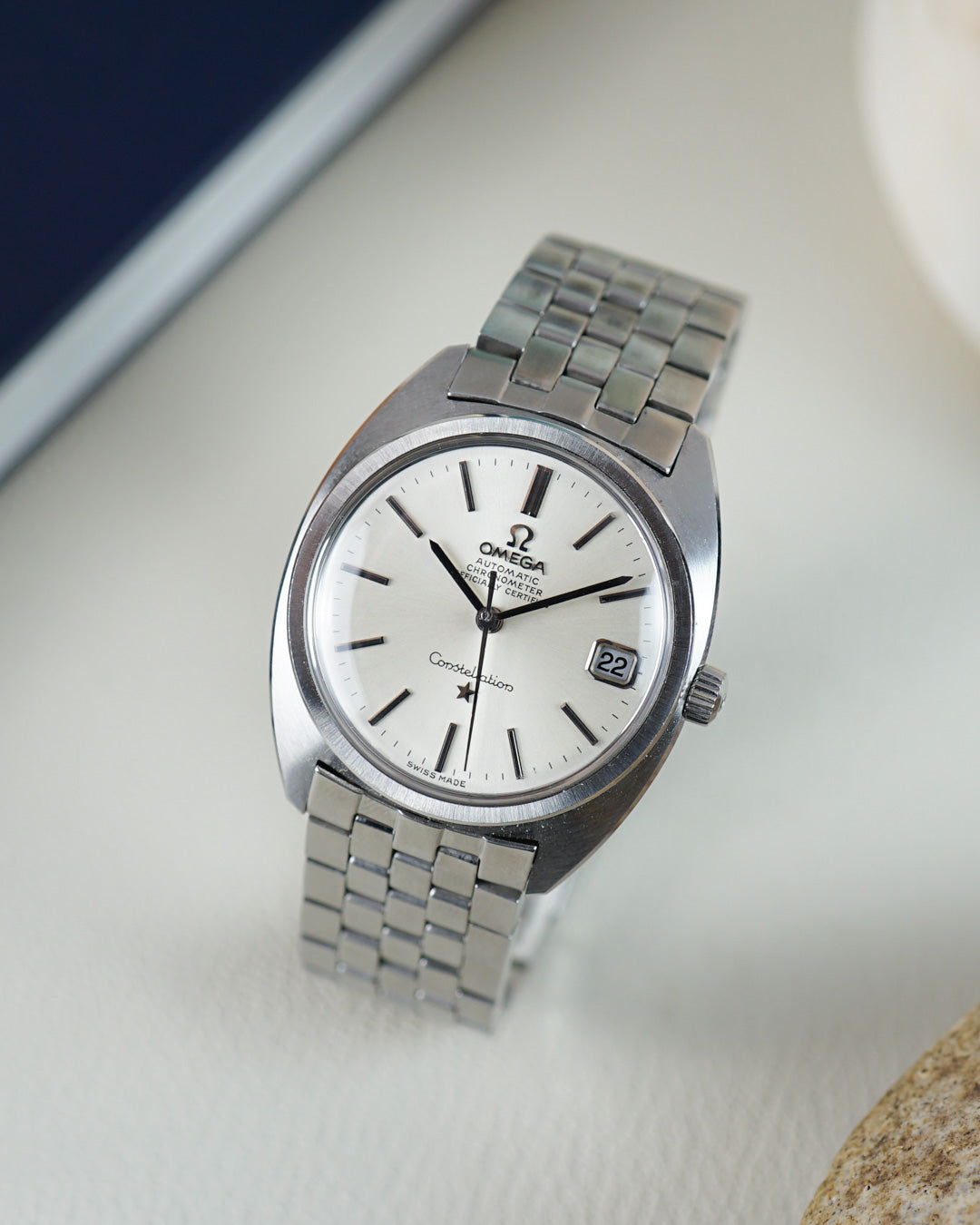
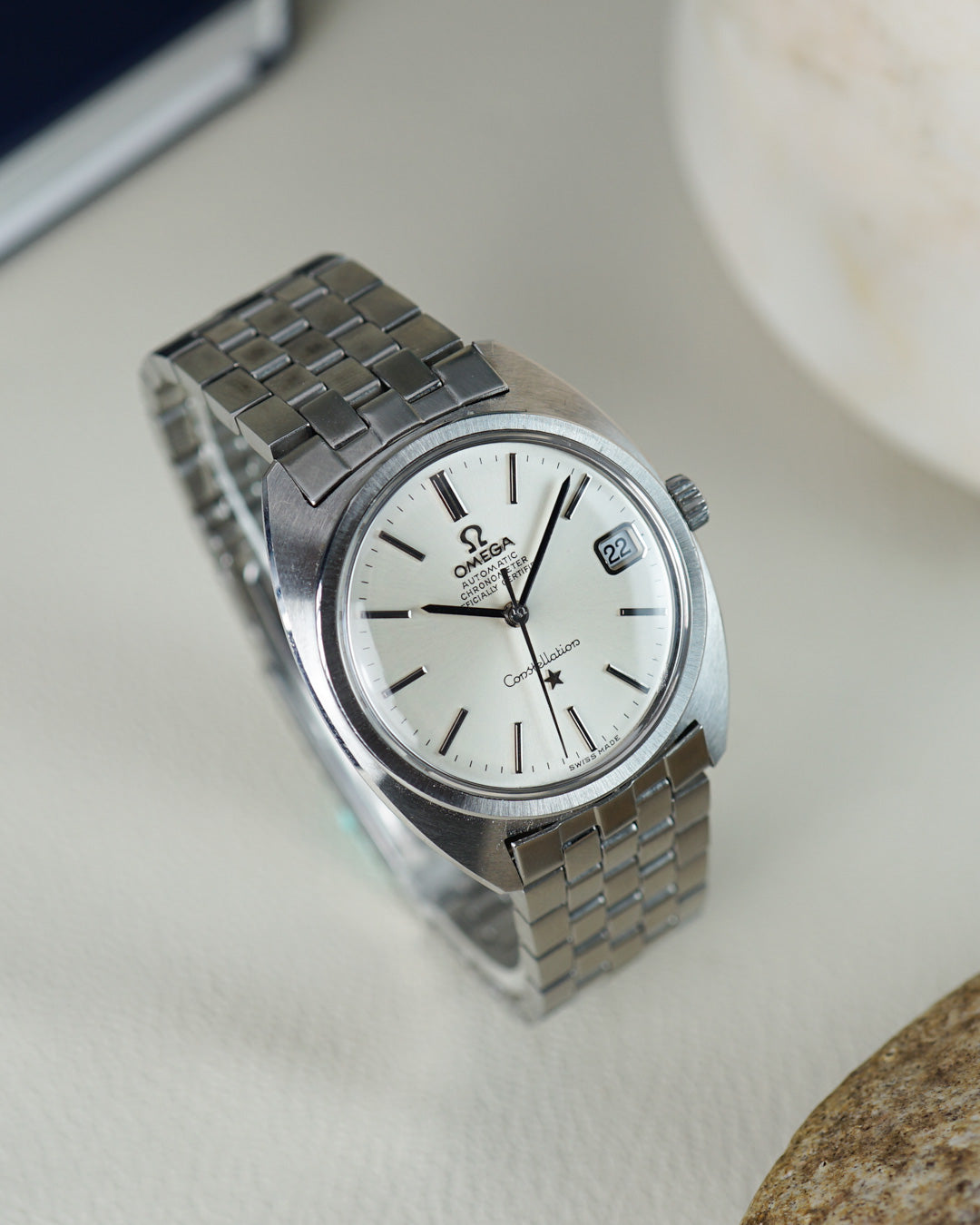
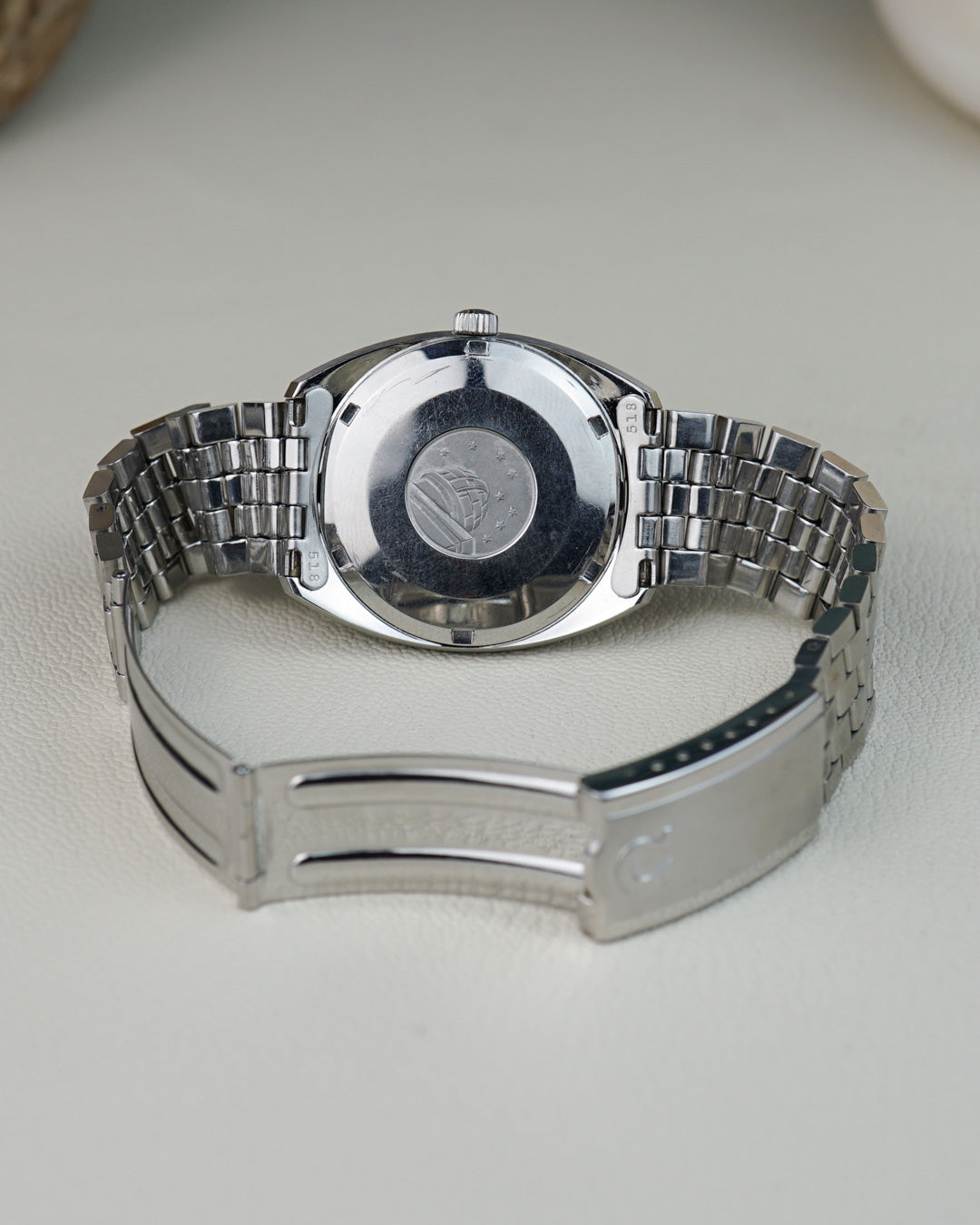
Omega Constellation reference 168.017 "C-Case" with bracelet
1970 | Stainless steel | Automatic | 35.0mm
The Constellation "C-Case" is among the most recognisable Omega designs of the 1970s — a watch that captures the decade's confidence in steel and integrated bracelets with quiet authority. The C-shape of the case, with its distinctive cushion-like profile and integrated bracelet flowing directly from the lugs, was a deliberate departure from the more classical Constellation of the 1960s. It has since become a collector favourite, appreciated precisely for what made it unconventional at the time.
Reference 168.017 wears the full Constellation identity: a creamy ivory dial with applied baton indices, the signature star at 6 o'clock, and the chronometer designation printed above — a reminder that every Constellation left the factory as a certified COSC-grade timekeeper. The date aperture at 3 o'clock sits neatly within the overall composition.
This example presents in excellent unpolished condition, retaining its original case surfaces and wearing its age with integrity. The original brick bracelet — so often stretched or replaced on examples of this era — is present and correct.
A thoroughly wearable piece of 1970s Omega, honest and complete.
Choose options
SPECIFICATIONS
Reference 168.017
Year 1970
Diameter 35.0 mm
Movement Automatic
Dial color Argent
Case material Stainless steel
Bracelet material Stainless steel
Accessories
CONDITION
Case Very good
Dial Very good
Movement Serviced
Hands Very good
Crown Very good
Warranty 12 months
Omega
Ask a Question
Do you have a question about this watch? We'd love to help.
Fill out the form below and we'll get back to you shortly.

Voilà une super boutique de montres vintage de grande qualité. Excellents échanges et prix très raisonnables !
Romain, FR
What a great experience with Clement! He has a beautiful selection of perfect condition vintage watches and took his time with us. Loved our experience and will absolutely be back!
Connor, US
Super professional, great selection of vintage watches, reliable and friendly. I highly recommend.
Laurent, FR
Very professional. Recommended! I hope to do business again with Sabiwatches!
Nikolaus, AT