

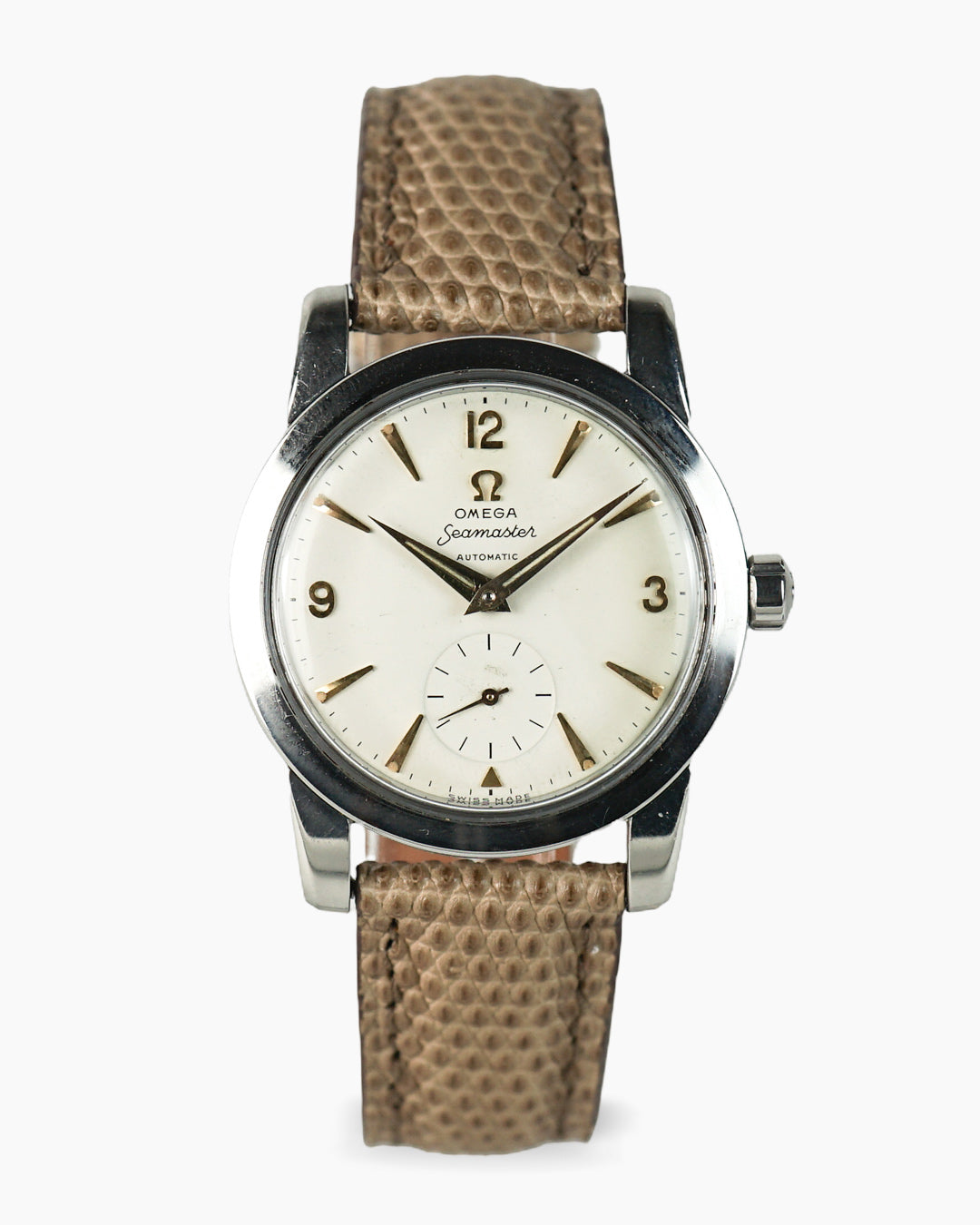
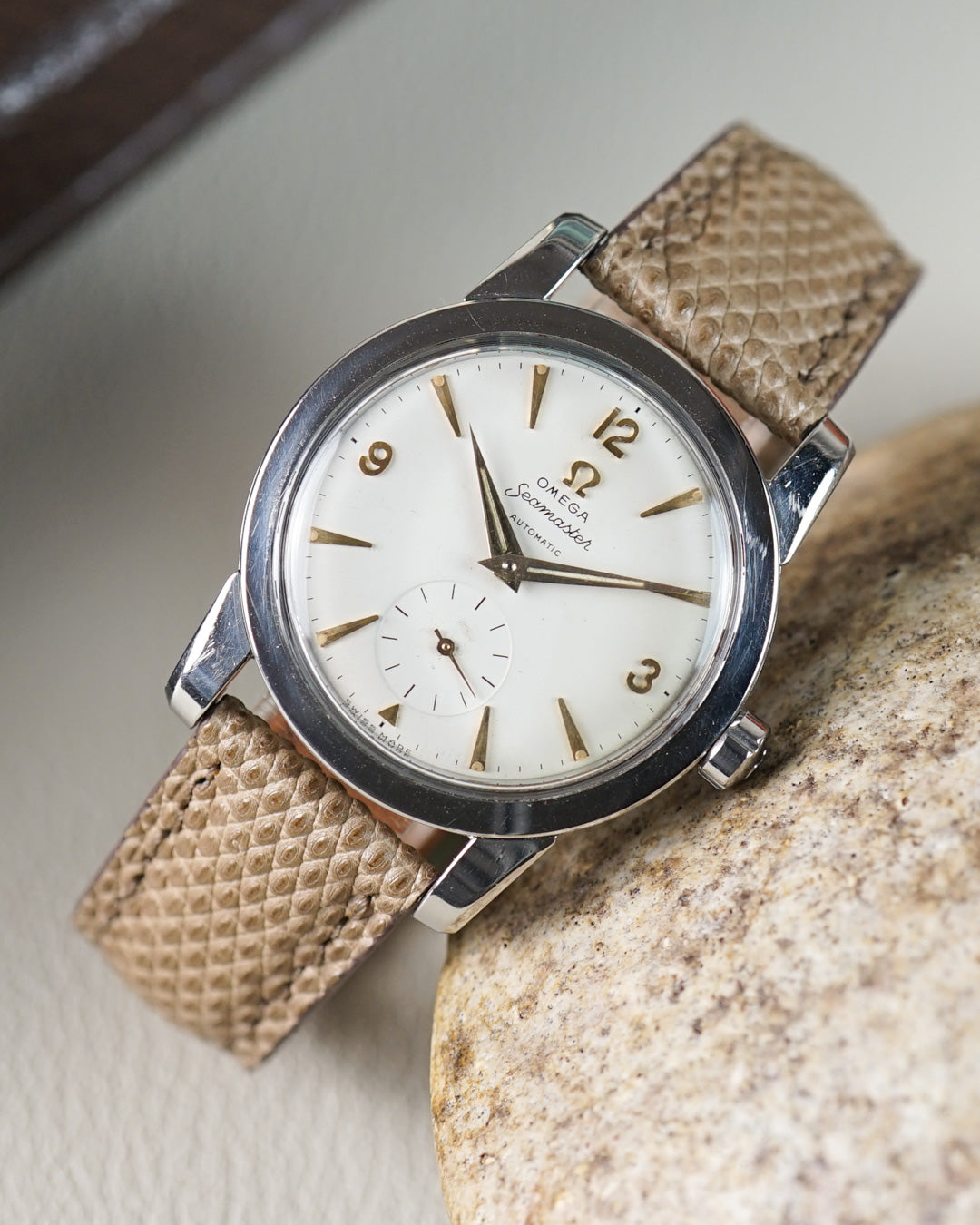
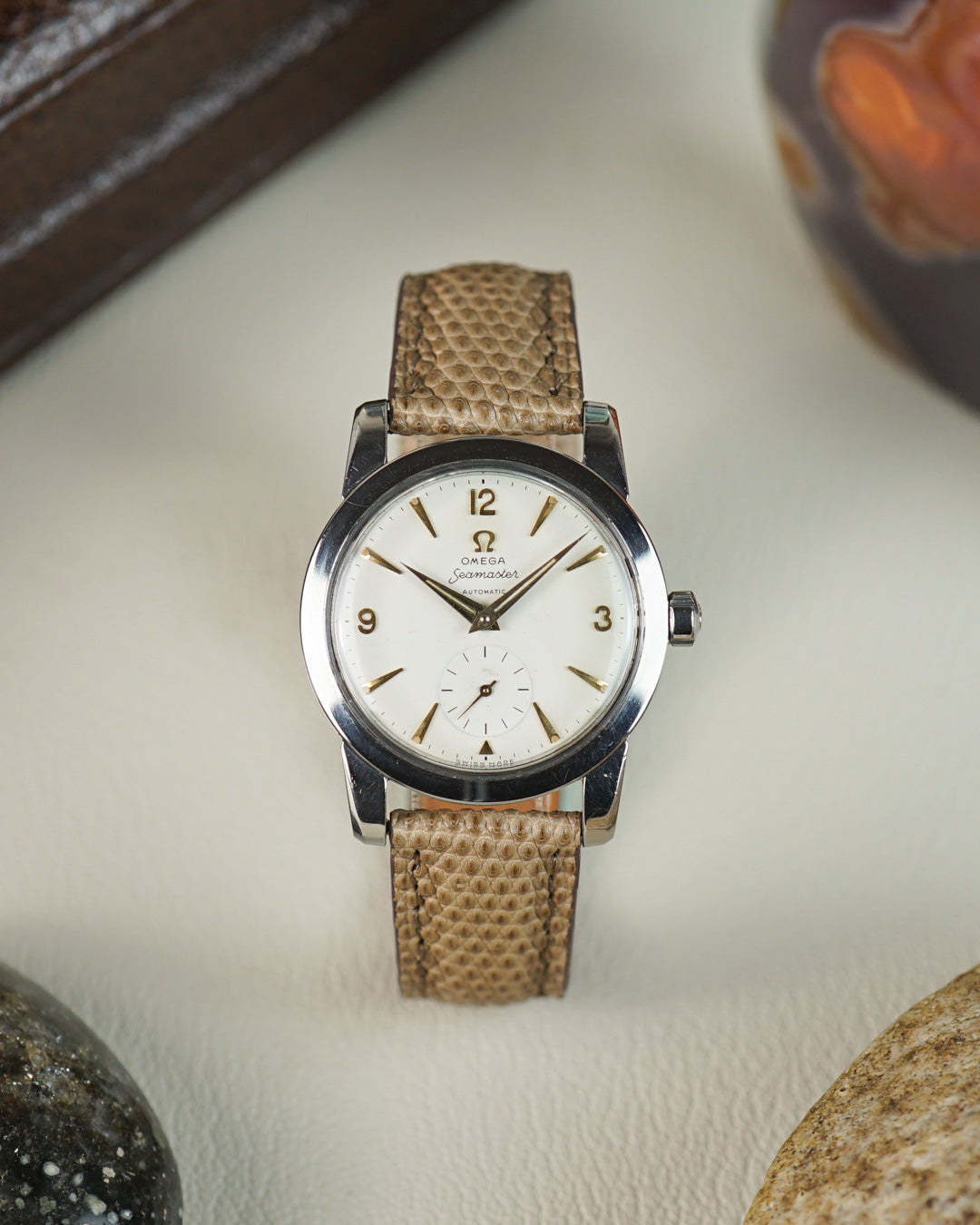
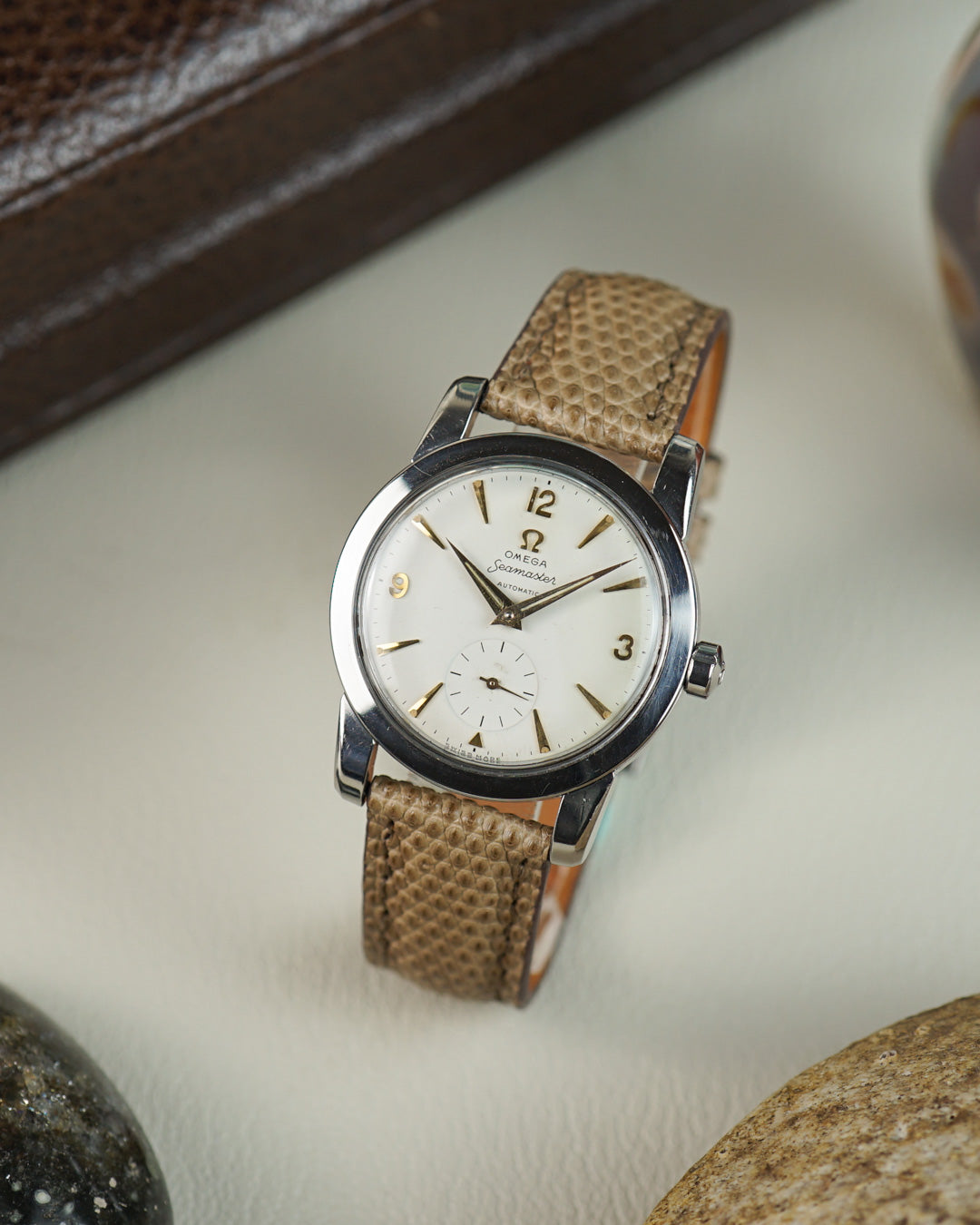
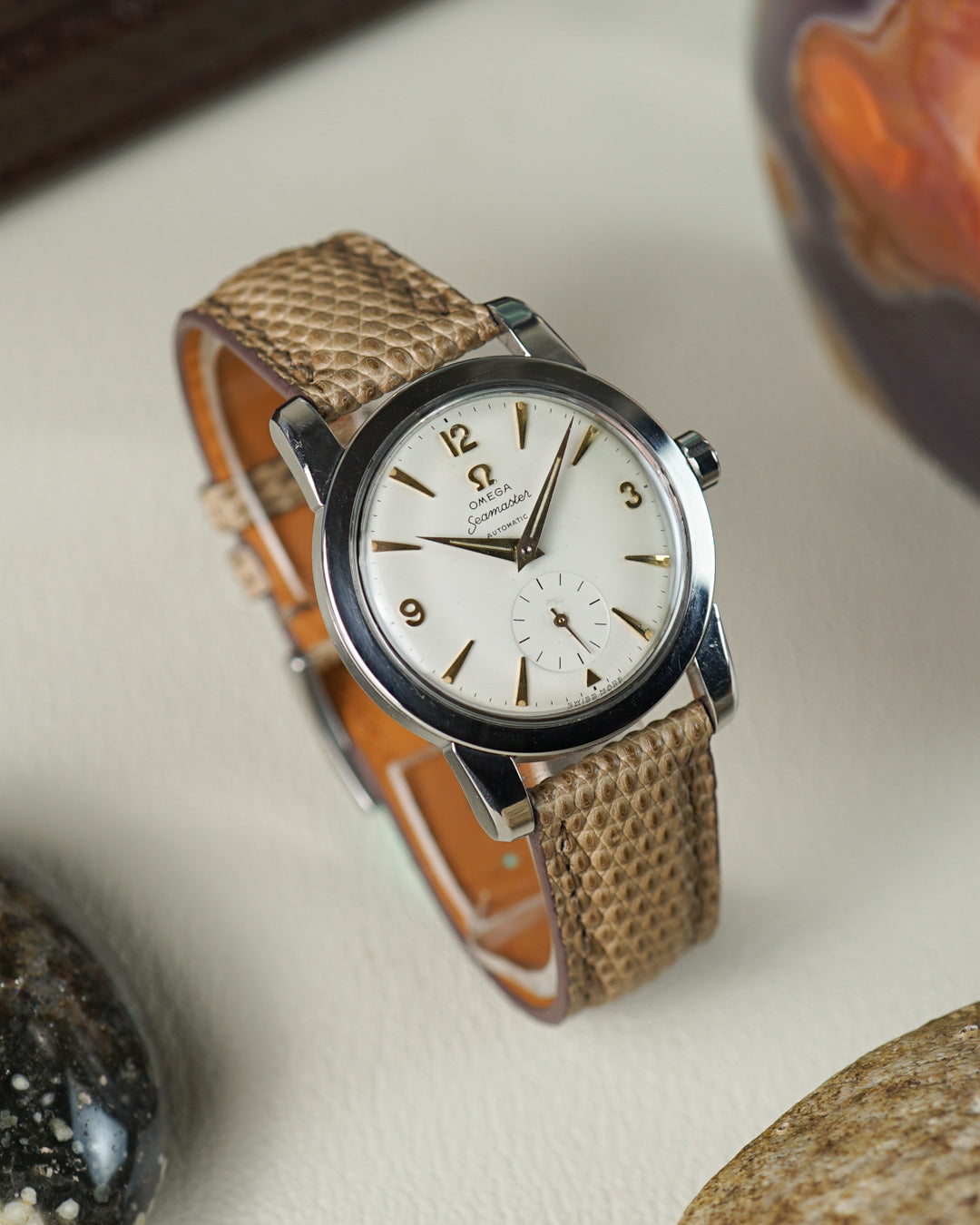
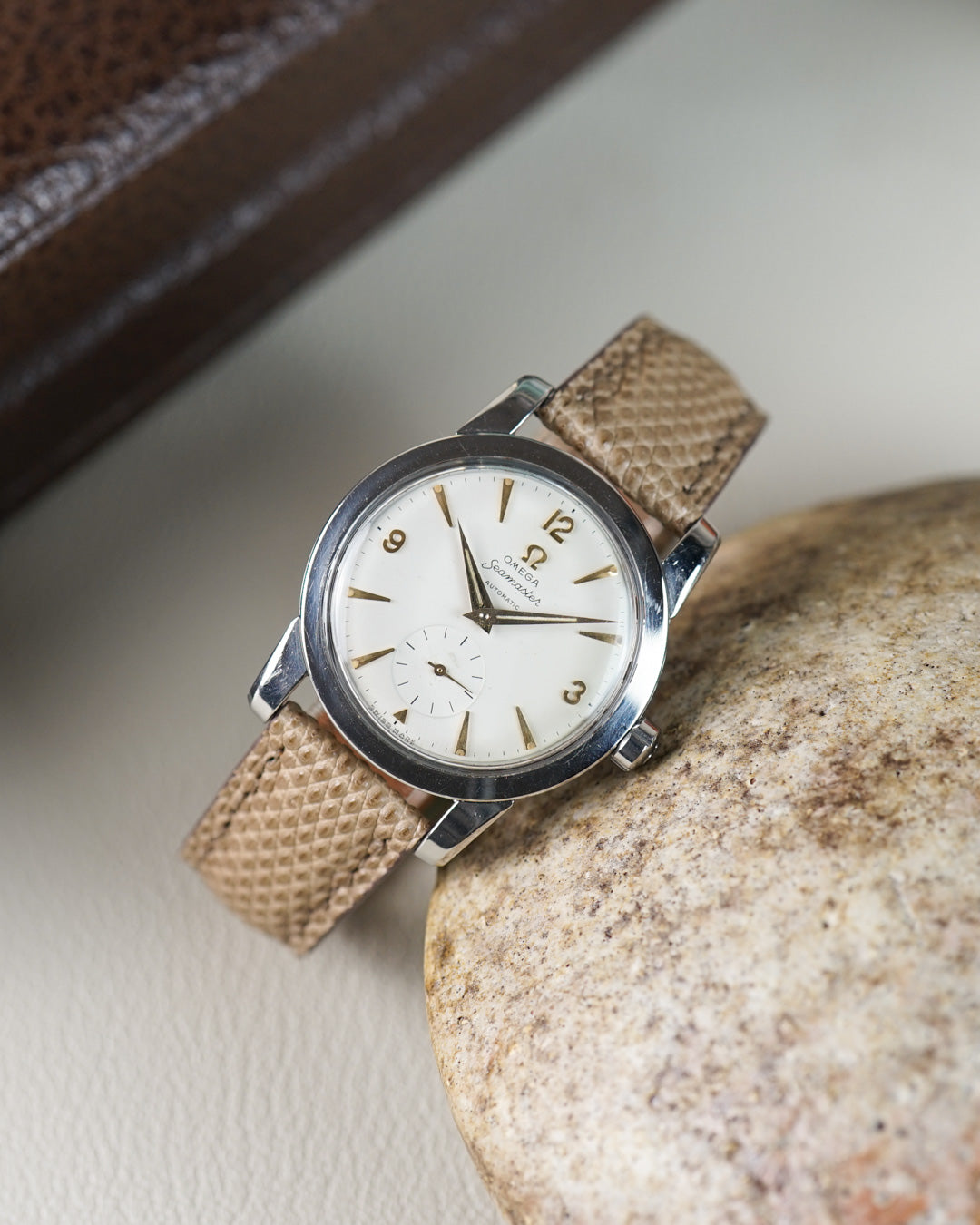
Omega Seamaster reference 2576-4 with 3-6-9 cream dial
1950 | Stainless steel | Automatic | 34.0mm
The Seamaster was introduced in 1948 as Omega's everyday companion — robust enough for active wear, refined enough for the office. By the early 1950s, it had found its visual identity: clean, balanced dials with a warmth that later decades would struggle to replicate. This example is a textbook expression of that moment.
This example comes with a cream dial with 3-6-9 Arabic numeral layout, with gilt hour markers. Numerals and hands have developed a nice and homogeneous patina entirely consistent with their age. The small seconds subdial at 6 o'clock — a detail that would gradually disappear from Seamaster dials as the decade progressed — adds a quiet sophistication to the composition. The script Seamaster signature completes the picture beautifully.
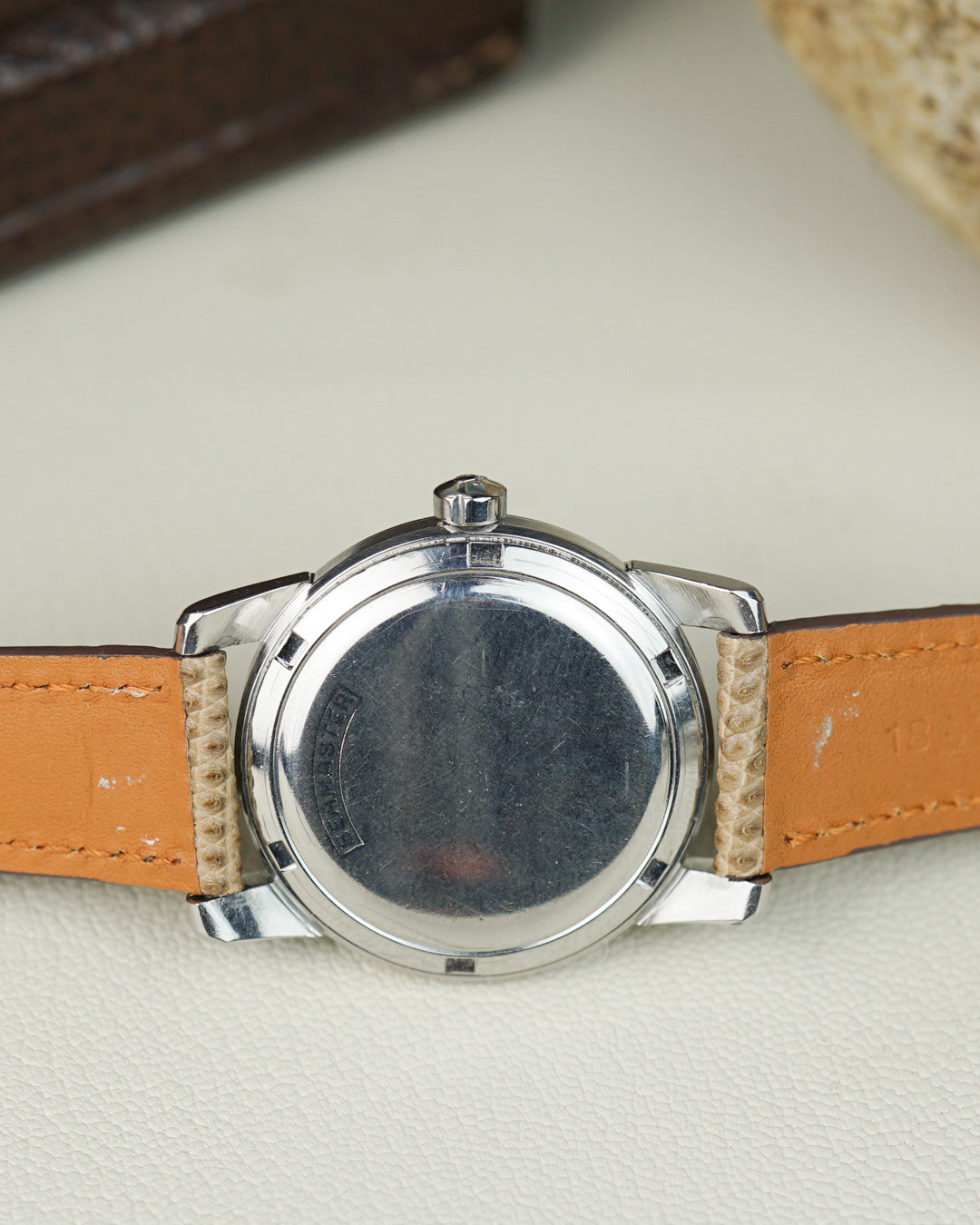
The round steel case wears its years honestly, with the proportions typical of early 1950s Omega production — modest in size by today's standards, but perfectly resolved on the wrist.
This example presents in very good condition, on a beige strap. A warm, characterful Seamaster from the decade when Omega could do little wrong
Choose options
SPECIFICATIONS
Reference 2576-4
Year 1950
Diameter 34.0 mm
Movement Automatic
Dial color Clair
Case material Stainless steel
Bracelet material Leather
Accessories
CONDITION
Case Very good
Dial Very good
Movement Serviced
Hands Very good
Crown Very good
Warranty 12 months
Omega
Ask a Question
Do you have a question about this watch? We'd love to help.
Fill out the form below and we'll get back to you shortly.

Voilà une super boutique de montres vintage de grande qualité. Excellents échanges et prix très raisonnables !
Romain, FR
What a great experience with Clement! He has a beautiful selection of perfect condition vintage watches and took his time with us. Loved our experience and will absolutely be back!
Connor, US
Super professional, great selection of vintage watches, reliable and friendly. I highly recommend.
Laurent, FR
Very professional. Recommended! I hope to do business again with Sabiwatches!
Nikolaus, AT